From Idea to Impact: Mission Hackathon Winners Bring The Second Chance Card to Clinical Settings in Pakistan
What began as an innovative idea at the 2026 Mission Hackathon is now entering real-world clinical testing, helping bridge the gap between hospital discharge and recovery for traumatic brain injury patients.
At Mission, we believe innovation has the greatest impact when it moves beyond ideas and into the communities that need it most.
That vision is becoming a reality for The Second Chance Card, the second-place winning project from the 2026 Mission Hackathon. Developed by Irem Uslu, Ihab Al Ramahi, and Omar Alomari, a team of participants based in Türkiye, the project is taking an exciting step forward as its creators begin piloting their solution in healthcare settings in Peshawar, Pakistan.
Addressing a Critical Gap in Brain Injury Recovery
For patients recovering from a traumatic brain injury (TBI), leaving the hospital is often just the beginning of a long and challenging recovery process.
In underserved communities, access to rehabilitation specialists, caregiver education, and follow-up care can be extremely limited. Families may suddenly find themselves responsible for supporting a loved one's recovery without the training or resources needed to recognize potential complications.
The Second Chance Card was developed to help address this challenge through a simple, accessible solution that empowers caregivers with practical guidance.
Introducing The Second Chance Card
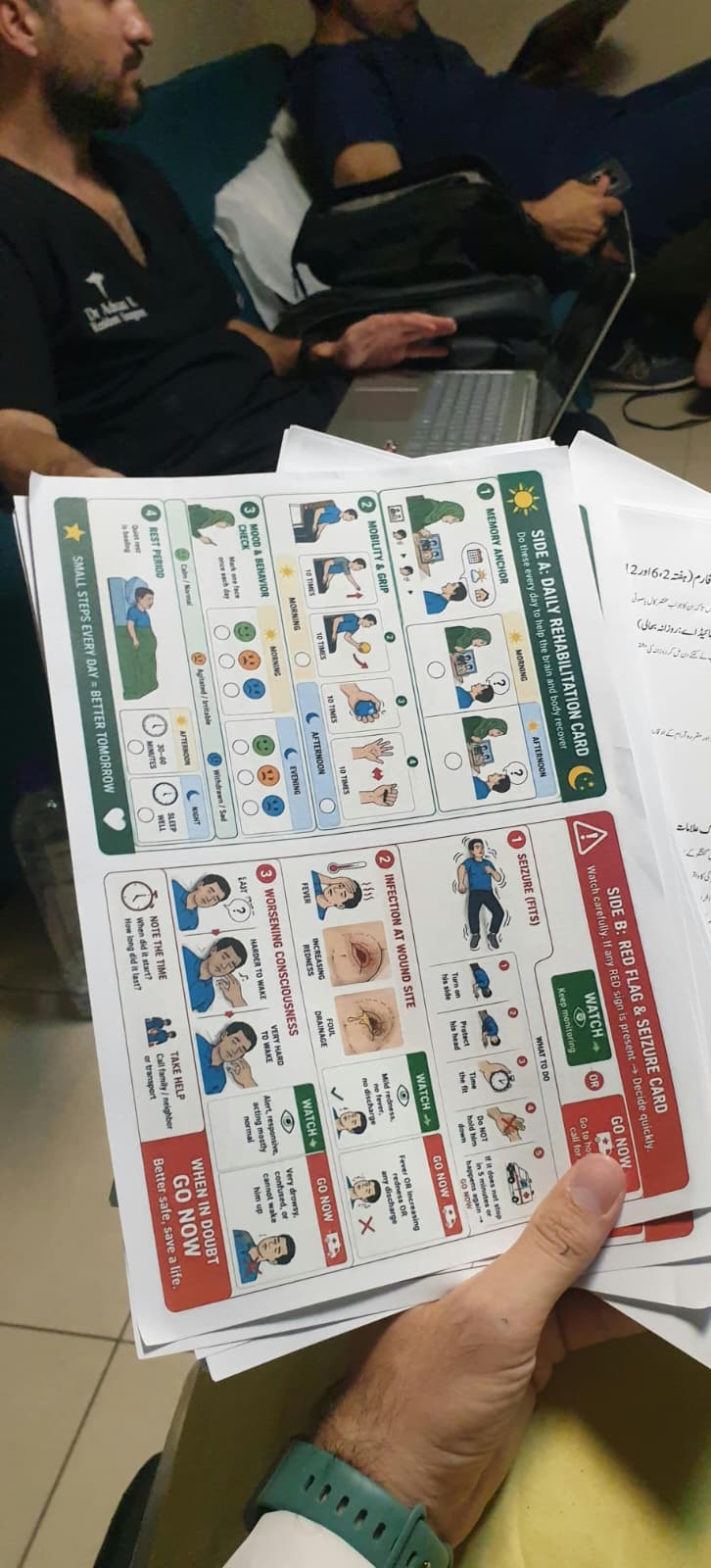
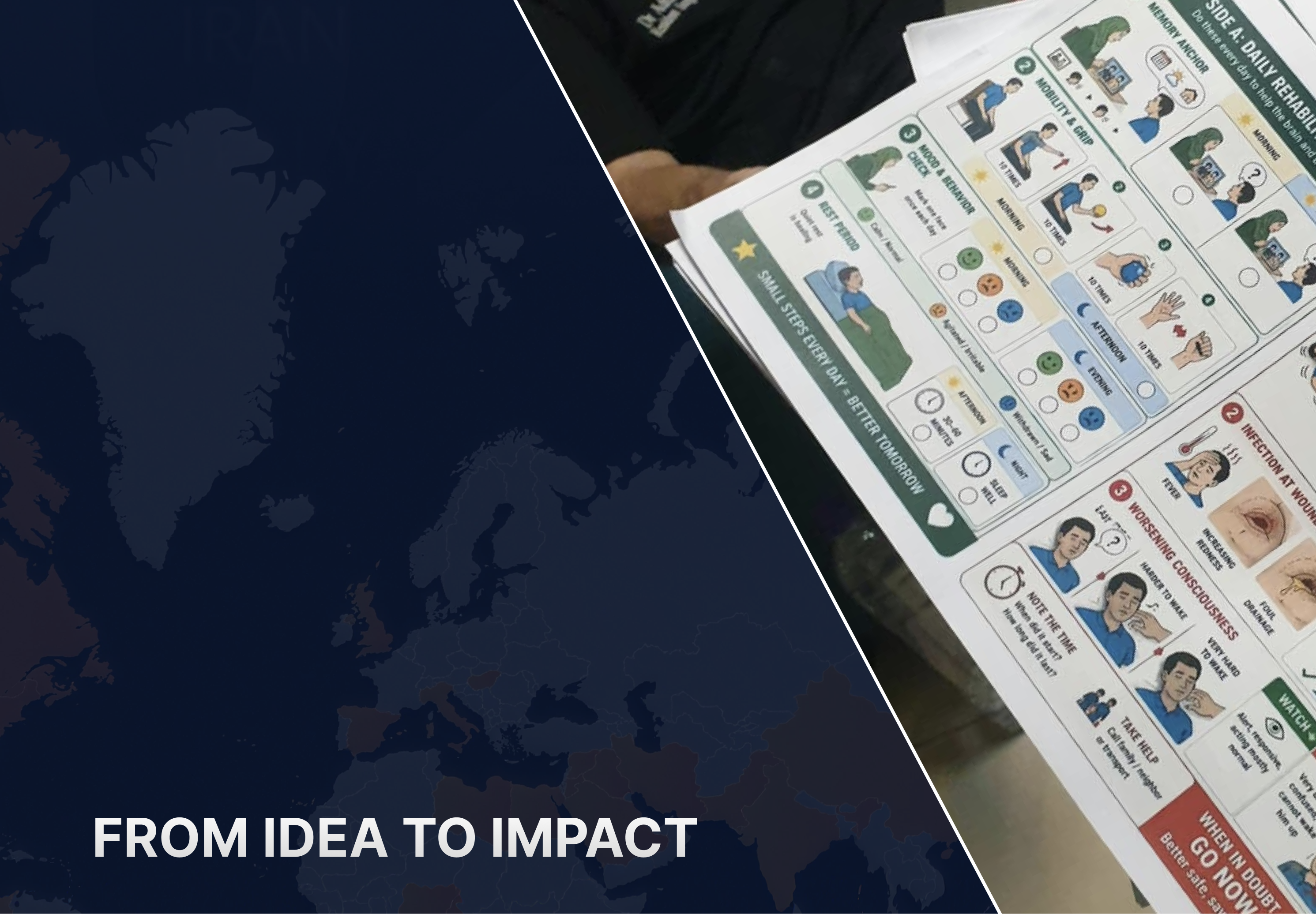
The Second Chance Card is a two-sided, illustrated caregiver toolkit designed to support patients and families following hospital discharge.
Created specifically for low-resource and low-literacy communities, the toolkit requires no electricity, internet access, mobile application, or additional healthcare staff.
The toolkit focuses on two essential components of recovery:
- Daily rehabilitation: One side features four illustrated activities designed to support memory, hand mobility, emotional well-being, and scheduled rest.
- Recognizing warning signs: The other side provides straightforward guidance to help caregivers identify concerning symptoms, including seizures, wound infections, and worsening neurological conditions, with clear instructions on when to monitor symptoms and when to seek immediate medical attention.
The project also proposes follow-up check-ins at two and six weeks through SMS or voice communication, helping reinforce caregiver education and support recovery beyond the hospital.
By transforming complicated medical instructions into accessible, visual guidance, the team hopes to make post-discharge care easier to understand and implement.
From the 2026 Hackathon to Clinical Implementation
Just months after earning second place at the 2026 Mission Hackathon, the team has taken an important step toward bringing its concept into clinical practice.
In October 2026, team member Omar Alomari shared an encouraging update: The Second Chance Card and accompanying questionnaires had been delivered to healthcare professionals involved in trauma care at NWGH in Peshawar, Pakistan, and Dr. Tariq Khan's clinic.
To improve accessibility for local patients and caregivers, the team also prepared questionnaires in both English and Urdu, alongside the illustrated cards.
The project is now entering an initial pilot phase, with the team coordinating with a senior registrar involved in trauma care to collect weekly updates and assess how the materials are being used.
These early steps will help the team better understand the toolkit's practical application in clinical settings. A more detailed report is expected following the pilot.
While the project remains in its early implementation stages, this milestone represents meaningful progress toward making the solution available to patients and families who could benefit from additional post-discharge support.
Innovation That Extends Beyond the Hackathon
The journey of The Second Chance Card reflects the broader mission behind the Mission Hackathon: bringing together passionate individuals to develop practical solutions to challenges in neurological healthcare.
What began as a collaborative project among three participants has progressed into a real-world pilot, demonstrating the potential for accessible, community-focused innovation to move beyond a competition.
The team's work also highlights an important reality: meaningful healthcare innovation does not always require advanced technology or expensive infrastructure. Sometimes, a thoughtfully designed educational tool can help address an important gap in patient care.
Looking Ahead
As The Second Chance Card moves through its pilot phase in Pakistan, the team will continue gathering feedback from healthcare professionals and evaluating opportunities to improve the toolkit.
The coming weeks will provide valuable insights into how the cards and questionnaires can support caregivers and potentially become part of a broader post-discharge care process.
Mission congratulates Irem Uslu, Ihab Al Ramahi, and Omar Alomari on this exciting milestone and looks forward to following their continued progress.
From an idea at the 2026 Mission Hackathon to a pilot in real-world healthcare settings, The Second Chance Card is a powerful example of how innovation, collaboration, and determination can help turn ideas into meaningful action.